

Climate Change and Cognitive Biases
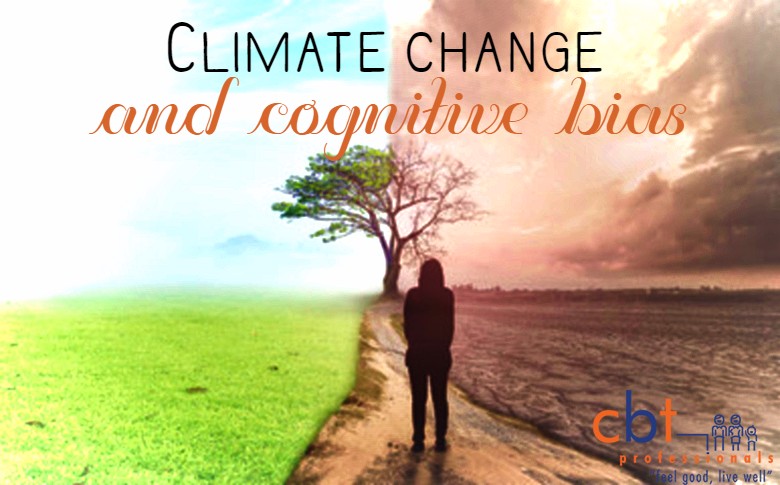
Climate change is one of the most pressing challenges of our time, yet understanding it fully requires navigating both complex scientific data and the way our human minds process information. This blog explores the basics of climate change, the training behind trusted scientific research, and the cognitive biases that can shape—or distort—our understanding of global warming.
Climate Change: The Basics
The Earth’s climate has changed continuously over its 4.54 billion-year history. Life has adapted and evolved throughout this time, with modern humans (Homo sapiens) emerging around 200,000 years ago. Agricultural developments 10,000 years ago supported population growth, leading to the technological and societal changes that shape the modern world.
The Industrial Revolution, beginning in the 1750s, marked a dramatic acceleration in human impact on the planet. Energy production, manufacturing, transportation, agriculture, and urbanisation released greenhouse gases (GHGs) such as carbon dioxide (CO₂), methane (CH₄), nitrous oxide (N₂O), and hydrofluorocarbons (HFCs).
These gases trap heat in the atmosphere—a phenomenon known as the Greenhouse Effect—leading to global warming. While some gases like water vapour remain in the atmosphere for only days, CO₂ and methane persist for years, centuries, or longer, creating lasting climate impacts.
Before industrialisation, atmospheric CO₂ levels remained below 300 parts per million (ppm) for over 650,000 years. Since 1750, CO₂ has risen to over 410 ppm due to human activity. If left unchecked, global average temperatures could rise between 1°C in the near term and up to 6°C or more by the end of the century. These changes impact ecosystems, sea levels, glaciers, ocean acidity, and weather patterns—affecting all life on Earth.
For reliable, readable climate science resources, visit:
Why We Can Trust Climate Scientists
Scientific research into climate change has been ongoing for over 100 years, increasingly rigorous and expansive. Scientists undergo extensive training:
- Education: Primary and secondary schooling with strong foundations in maths, science, and reasoning.
- University Degrees: Bachelor’s, Honours, Masters, and often Doctoral studies in scientific disciplines.
- Research Training: Conducting supervised research, applying rigorous methodologies, and learning to critically evaluate results.
- Peer Review: Research must withstand review by other experts before publication in academic journals.
This process ensures accuracy, reliability, and reproducibility. Most peer-reviewed climate studies indicate that 97% of scientists agree that the Earth is warming due to human activity, including greenhouse gas emissions and deforestation.
Tips for accessing trustworthy sources:
- Peer-reviewed journals, e.g., Frontiers (open access)
- Government-funded research institutes like CSIRO
- Avoid politically funded think tanks with potential conflicts of interest
Cognitive Biases and Climate Change Perception
Despite overwhelming scientific consensus, some people struggle to accept climate change. This is often influenced by cognitive biases—automatic thinking patterns shaped by evolution to help humans survive. While these biases were useful for survival, they can hinder understanding complex, long-term problems like climate change.
Here are key cognitive biases relevant to climate change:
- Confirmation Bias: Seeking information that supports pre-existing beliefs while ignoring contrary evidence.
- Loss Aversion: Preferring to avoid losses rather than achieve equivalent gains, leading to resistance to lifestyle or policy changes.
- Sunk-Cost Fallacy: Continuing a behaviour or belief because of prior investment, despite evidence it may be harmful.
- Pattern Recognition Bias: Seeing connections or patterns where none exist, which can fuel misinformation or conspiracy thinking.
- Optimism Bias: Underestimating risks because we expect things to turn out better than statistics suggest.
- Present Bias: Prioritising immediate benefits over long-term gains, which can reduce urgency in tackling climate change.
- Cognitive Dissonance: Experiencing mental discomfort when holding conflicting beliefs, often leading to rationalisation or denial.
- Framing Effect: Making decisions based on how information is presented rather than the underlying facts.
- Illusory Truth Effect: Believing repeated statements are true, regardless of their accuracy.
Awareness of these biases improves critical thinking, making it easier to assess climate information objectively and make informed decisions.
For further reading on cognitive biases:
- The Decision Lab – Biases
- ScienceDirect – Cognitive Bias
- ResearchGate – The Evolution of Cognitive Bias
How to Engage Critically With Climate Information
- Ask: Am I letting my beliefs colour my interpretation of the facts?
- Check the source: Prioritise peer-reviewed science over politically funded commentary.
- Recognise emotions: Fear, hope, or resistance can influence judgement.
- Seek multiple perspectives: Compare independent scientific studies to avoid selective exposure.
FAQs: Climate Change and Cognitive Bias
Q: How do cognitive biases affect understanding of climate change?
A: Biases like confirmation bias or loss aversion can lead people to ignore evidence, overemphasise personal experiences, or reject inconvenient truths.
Q: How reliable is climate science?
A: Climate science relies on rigorous peer-reviewed research, extensive training, and replication, making it highly reliable.
Q: Why do some people deny climate change despite scientific consensus?
A: Cognitive biases, emotional resistance, political ideology, and misinformation contribute to denial.
Q: How can I verify climate change information?
A: Use peer-reviewed journals, reputable government and academic sources, and be critical of politically or commercially funded think tanks.
THREE CONVENIENT LOCATIONS
MOUNT GRAVATT
Mt Gravatt Medical PrecinctSE 105, 1808 Logan Rd
Upper Mount Gravatt QLD 4122